What Motorists Should Know About School Bus Safety
Let's talk about school bus safety and what drivers should know.
Students who ride the bus to school instead of driving are 70 times more likely to arrive safely. School buses are the most strictly regulated vehicles on the road, so they're built to be safer than passenger vehicles in terms of preventing collisions and injuries, and stop-arm laws protect children from other motorists in every state.
School buses are designed to be very visible, with features such as flashing red lights, cross-view mirrors, and stop-sign arms. Rollover protection, protected bus seats, and strict crush regulations are also included.
By making it illegal for automobiles to pass a school bus when dropping off or picking up passengers, regardless of approach direction, laws protect students entering and disembarking from school buses.
Seatbelts are required on school buses
Without a question, seat belts play an important role in keeping passengers safe in these vehicles. School buses, on the other hand, have a unique safety restraint system that works very well.
Because large school buses are heavier than passenger cars and light trucks, impact forces are distributed differently. As a result of these considerations, bus passengers are subjected to significantly less impact force than passengers in passenger cars, light trucks, and vans. Due to compartmentalization, children are protected from crashes by sturdy, closely-spaced seats with energy-absorbing seat backs.
On small school buses (with a gross vehicle weight rating of 10,000 pounds or less), lap and/or lap/shoulder belts must be installed in all designated sitting areas. Because the sizes and weights of small school buses are similar to those of passenger automobiles and trucks, seat belts are essential for occupant protection.
Bus stations have safety measures
For your child, the most risky element of a bus ride is approaching or exiting one. Before you and your child return to school or start school for the first time, it's vital that you and your child grasp traffic safety requirements. Teach your child to follow these rules to make school bus commuting safer.
# 1 For Parents
- Your child should arrive at the bus stop at least five minutes before the bus is scheduled to arrive. Show your child where to stand at the bus stop to wait for the bus: at least three large steps (six feet) away from the curb. Remind your child that the bus stop is not an appropriate place to run or play.
- Your youngster should wait until the bus comes to a complete stop, the door opens, and the driver affirms everything is well before approaching the bus door. Your child should use the handrails to avoid falling.
- Allowing your youngster to walk behind a school bus is never a good idea. If your child needs to cross the street in front of the bus, tell him or her to take at least five large steps (10 feet) on the sidewalk or along the side of the road before crossing. Your youngster should make eye contact with the bus driver before crossing the street to ensure that he or she is visible to the driver. If your child drops something near the school bus, such as a ball or a book, it is better if he or she alerts the bus driver as soon as possible. The driver should not attempt to pick up the item because he or she may not be able to see your child.
# 2 For Motorists
To make school bus travel safer for everyone, follow these guidelines:
When backing out of a driveway or exiting a garage, keep an eye out for children walking or bicycling to school.
Keep an eye out for young kids who may be thinking about going to school but not necessarily about getting there safely when driving through school zones.
Take it easy on yourself. Keep an eye out for children walking along the street, especially if there are no sidewalks in the area.
Keep an eye out for children who are running around and playing around bus stops.
Keep your eyes peeled for more information. Children who are late for the bus may dart out into the street without looking for traffic.
Learn about and adhere to your state's school bus laws, as well as the "flashing signal light system" employed by school bus drivers to alert motorists of imminent actions:
The flashing yellow lights signal that the bus is approaching a stop to load or discharge children.
Drivers should reduce their speed and be prepared to come to a complete stop.
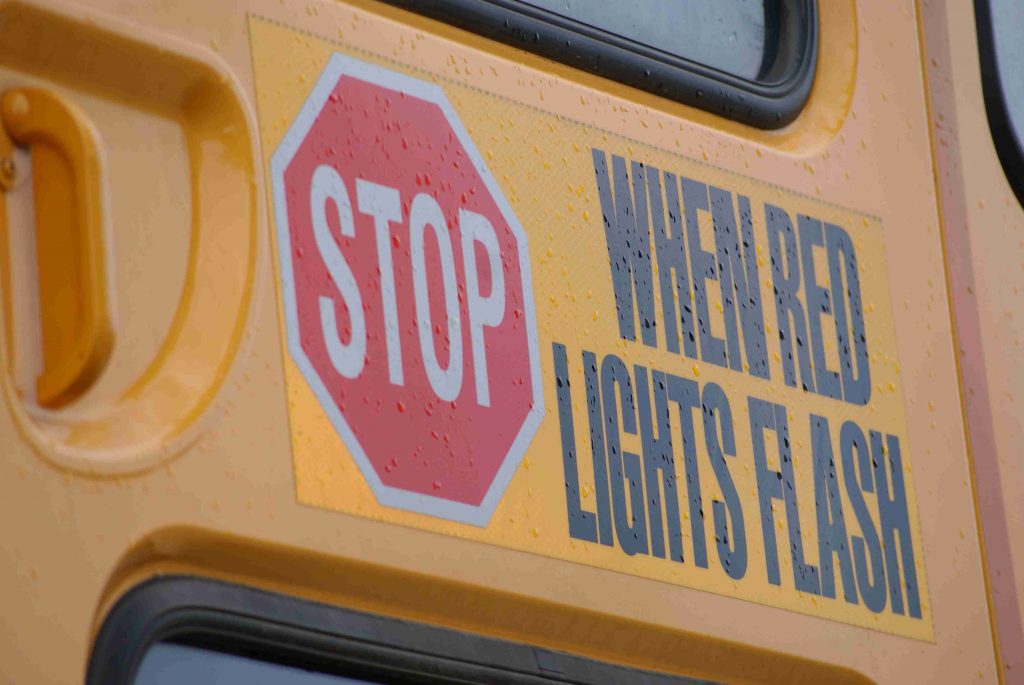
With red flashing lights and extended stop arms, the bus has come to a rest, signaling that children are boarding or disembarking.
Motorists must stop their cars and wait until the red lights stop flashing, the extended stop-arm is withdrawn, and the bus begins to move again before advancing.
Comments
Post a Comment